
SOVAA PT SOVAA KARYA INDONESIA
The geopolitical and economic realignments of recent years have fundamentally reshaped the Eurasian furniture trade. As Western European luxury brands withdrew from the Russian market, commercial developers, hotel chains, and retail distributors in Moscow, Saint Petersburg, Novosibirsk, and Vladivostok faced an unprecedented supply chain vacuum. In response, China wholesale custom furniture factories have stepped into the spotlight, transitioning from background original equipment manufacturers (OEM) to essential strategic partners for the Russian Federation’s real estate and commercial renovation sectors.
Navigating direct B2B furniture procurement from Chinese manufacturing hubs (such as Foshan, Dongguan, and Jakarta-integrated supply chains) requires more than basic transactional sourcing. It demands a rigorous understanding of Eurasian Economic Union (EAC) technical regulations, GOST-R compliance standards, localized climate resilience engineering, and optimized cross-border rail logistics. This whitepaper provides commercial procurement managers, interior architects, and furniture wholesalers with an authoritative blueprint for sourcing custom upholstered sofas, solid ash wood hospitality suites, office executive desks, and space-saving modular compression seating directly from verified OEM/ODM factories.
Full documentation compliance under TR CU 025/2012 (Safety of Furniture Products) ensuring seamless customs clearance at Russian border points.
Kiln-dried hardwood frames (8-10% moisture content) engineered to withstand extreme indoor dry heating during harsh Russian winters without warping.
Eliminate currency conversion losses and SWIFT bottlenecks with direct VTB / CIPS financial channel integration for frictionless trade payments.
Standard tropical or temperate-zone furniture manufacturing often fails when deployed in Russian indoor environments. The primary technical failure point is the extreme contrast between sub-zero exterior temperatures (often falling below -30°C in Central and Eastern Russia) and dry, intensely heated interior spaces maintained by central radiator systems (district heating). Indoor relative humidity (RH) in Russian apartments and hotels during winter frequently plummets below 20%.
When solid wood furniture with improper moisture content is introduced into these hyper-dry conditions, rapid moisture desorption occurs. This leads to deep structural splitting, joint dislocation, surface lacquer checking, and fabric degradation. Professional custom furniture factories in China catering to Russia implement specific material modification protocols to guarantee structural longevity:
| Material Category | Standard Global Specification | Russian Market Customization Standard | Engineering Objective |
|---|---|---|---|
| Solid Wood Framing (Ash, Teak, Beech) | Moisture Content: 12% - 15% | Kiln-Dried Moisture Content: 8% - 10% (Vacuum Dehydration) | Prevents wood shrinkage, frame squeaking, and micro-cracking during winter radiator heating. |
| Upholstery Fabrics & Leathers | Standard Martindale: 20,000 Rubs | Martindale > 50,000 Rubs + Anti-Static Finish | Resists high static electricity buildup in low-humidity air; prevents premature surface peeling. |
| Cushioning Foams | Standard Polyurethane (28-32 kg/m³) | High-Resilience Cold-Cured Foam (45-55 kg/m³) | Maintains elasticity and dimensional recovery after prolonged exposure to cold transport conditions. |
| Metal Hardware & Glides | Standard Electroplating | Heavy-Duty Powder Coating & Galvanized Steel | Eliminates rust risks caused by condensation when containers cross cold border hubs. |
Understanding buyer intent in Russia requires mapping specific product typologies to localized urban developments, architectural preferences, and commercial real estate typologies across key Russian territories:
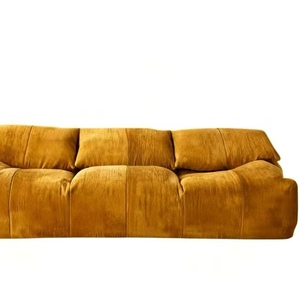
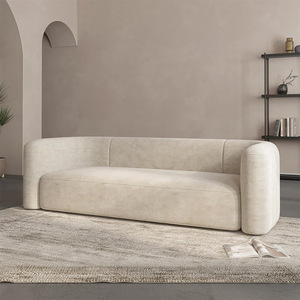
In Moscow's premier residential towers and upscale apartment complexes, interior aesthetics lean heavily toward Italian Light Luxury and Modern Neo-Classic Tufted Sections. Sourcing requirements demand high-density modular sectional sofas (such as item #4 and #7 in our portfolio) featuring Italian-style top-grain leather or premium velvet upholstery. Space efficiency is paramount; modular compression sofas that allow rapid assembly without sacrificing structural elegance are highly sought after by Moscow interior design firms.
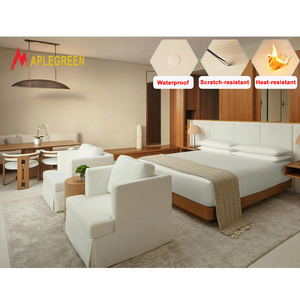
Saint Petersburg's historical renovation projects require eco-friendly modern ash wood hotel bedroom packages (Item #1). Contract project furniture must meet strict acoustic damping standards and possess a 10-year structural warranty. Chinese factories supplying this region integrate kiln-dried solid ash with fire-retardant commercial coatings certified under Russian fire safety regulations (Federal Law No. 123-FZ).
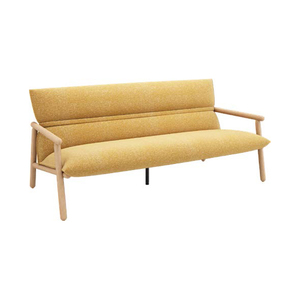
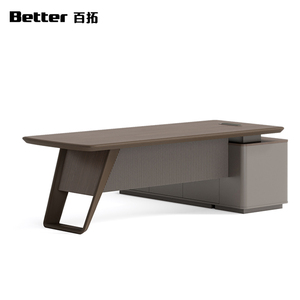
Commercial office complexes and corporate headquarters in major Siberian industrial hubs demand heavy-duty, ergonomic furniture. Executive boss desks with integrated drawer storage (Item #8) and Scandinavian contract lounge seating (Item #5) form the backbone of corporate tenders. Durability, cable-management integration, and scratch-resistant melamine/veneer finishes are non-negotiable requirements for Russian corporate buyers.
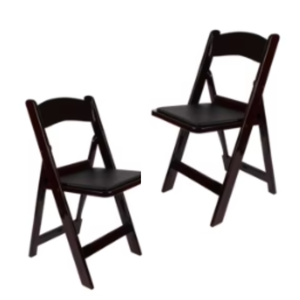
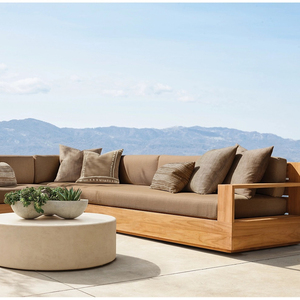
Hospitality expansion along the Russian Riviera requires specialized outdoor furniture capable of enduring high UV radiation, sea-salt humidity, and heavy commercial turnarounds. Indonesian OEM teak outdoor furniture (Item #3) and high-density resin folding chairs (Item #2) provide weather-resistant, space-saving outdoor seating solutions for seaside cafes, pool decks, and banquet facilities.
Executing a successful procurement contract with a China custom furniture factory for Russia requires overcoming three historical friction points: transport logistics, customs regulatory compliance, and cross-border currency settlement.
While ocean freight via Saint Petersburg or Novorossiysk remains viable for non-urgent bulk orders, direct overland rail freight via the China-Europe / China-Russia Railway Express has become the primary transit backbone. Key routes include:
All commercial furniture imported into the Eurasian Customs Union (Russia, Belarus, Kazakhstan, Armenia, Kyrgyzstan) must comply with Technical Regulation TR CU 025/2012 "On Safety of Furniture Products". Qualified Chinese factories assist Russian importers by providing complete technical passports, raw material emission test reports (Form E1 formaldehyde standards), and structural stability certifications required by accredited Russian testing laboratories.
Reflecting the foundational strength of our integrated manufacturing ecosystem (operating since 2015 with dual production facilities spanning extensive manufacturing floorspace), our factory offers a single-roof production model. By combining product design development, raw material sourcing, frame fabrication, precision foam cutting, and master upholstery under one management team, we guarantee total quality accountability.
For Russian procurement officers and corporate wholesalers, our enterprise framework delivers decisive competitive advantages:
Operating 2 dedicated production plants since 2015 with specialized lines for solid wood machining, metal welding, and custom hand-tufted upholstery.
Every custom design created for Russian wholesalers, interior designers, or commercial hotel developers is kept 100% strictly confidential under NDA.
Eliminate middle-man markups. From CAD engineering and prototype sampling to container loading, every step is executed in-house.
To maximize margin efficiency and avoid common trade pitfalls when contracting with a China wholesale custom furniture factory for Russia, procurement directors should follow a structured 5-stage procurement lifecycle:
Partner with an established B2B custom furniture manufacturer engineered for the Russian Federation market. Contact our engineering team today to receive product catalogs, material swatches, and factory direct pricing.
Contact Us