
Executive Summary: The Evolving B2B Recliner Procurement Landscape
The global motion furniture and recliner chair industry is undergoing a structural shift driven by advanced actuation technologies, ergonomic innovation, and rising consumer demands for multifunctional home and commercial seating. As global importers, contract furniture buyers, and furniture retail chains evaluate supply chain options, identifying top-tier manufacturers in China and Southeast Asia requires moving beyond unit price comparisons to analyzing full-spectrum OEM/ODM capabilities, raw material integration, structural compliance standards (ANSI/BIFMA X5.4), and production scalability.
This industry report outlines technical metrics, structural benchmarks, supply chain risk mitigation, and global market trends essential for commercial buyers sourcing motorized power recliners, manual leisure swivel chairs, contract hospitality lounge sofas, and custom residential motion furniture.
Global Recliner Market Drivers & Future Procurement Trends (2025–2030)
Driven by growing urbanization, aging demographics in North America and Western Europe, and the expansion of boutique hospitality resorts, procurement managers must align sourcing strategies with several macro developments:
1. IoT-Enabled Smart Motion
Next-generation recliners incorporate integrated micro-actuators, wireless charging pads, memory-position sensors, ambient LED lighting, and app-controlled ergonomic zoning for smart home and luxury cinema applications.
2. Sustainable Material Engineering
ESG compliance is shifting demand toward FSC-certified kiln-dried frames, zero-VOC water-based adhesives, CertiPUR-US® certified high-resilience foam, and recycled polyester corduroy or eco-friendly performance leathers (Leathaire).
3. Modular & Compact Footprints
Zero-wall recliner mechanisms that extend fully while sitting just 5–8 cm from a wall are dominating apartment-scale furniture collections and urban hospitality lounge projects.
Technical Anatomy & Engineering Benchmarks for Recliner Sourcing
Evaluating factory samples requires analyzing internal structural engineering. High-performance commercial recliners depend on three core sub-assemblies:
| Component | Standard Specification | Commercial / High-End Benchmark | Impact on Product Lifespan |
|---|---|---|---|
| Internal Frame | Plywood & Softwood combinations | Kiln-dried Birch/Larch hardwood + CNC cold-rolled steel sub-structure | Prevents frame warping, squeaking, and structural failure under load (>150kg rating). |
| Recline Mechanism | Generic stamped metal mechanisms | Leggett & Platt® or Kaidi® heavy-duty steel linkage mechanisms | Ensures smooth articulation over 25,000+ continuous motion cycles. |
| Actuation Motors | Single DC motor (Basic recline) | Dual OKIN® or Limoss® ultra-quiet motors (Independent back/footrest) | Provides independent lumbar, headrest, and footrest adjustment with <45dB noise levels. |
| Cushioning Core | 28kg/m³ Standard PU Foam | 35–45kg/m³ High-Resilience (HR) cold-cure foam + Pocket Spring cores | Eliminates sagging, retains shape retention, and maximizes weight distribution comfort. |
| Upholstery Fabric | Standard PU / Polyester | Performance Microfiber, Top-grain Genuine Leather, or High-Martindale Corduroy | Resists pilling and tearing with >50,000 double-rub abrasion resistance ratings. |
Manufacturing Superiority & Integrated OEM/ODM Capabilities
When selecting a production partner, overseas enterprise buyers benefit from facilities that unite product development, raw material sourcing, sample prototyping, and full assembly under a unified management structure.
Operating dual manufacturing facilities with an established track record since 2015, our production model balances cost efficiency with stringent quality control standards:
- In-House R&D & Rapid Prototyping: Converting CAD drawings or concept sketches into functional 1:1 physical prototypes within 14 business days.
- Strict IP & Design Data Protection: NDA-backed production ensuring custom designs developed for specific retail collections remain confidential.
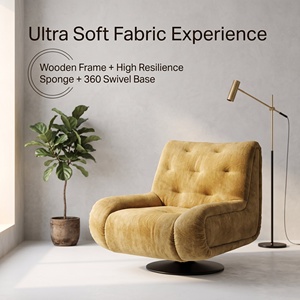
- Flexible Specification Layering: Offering variable material specs across wood frames, high-resilience sponge densities, and upholstery grades to meet precise price targets for high-volume retail or premium commercial projects.
- Comprehensive Quality Control (QC): 100% inline inspection covering frame load capacity, sewing seam strength, motor duty-cycle testing, and carton drop testing prior to export container loading.
B2B Sourcing Guide: Auditing a Recliner Chair Manufacturer
Prior to issuing purchase orders, sourcing directors should perform strict technical factory audits. Below is an essential verification checklist to mitigate supply chain risks:
- Verify International Compliance Certifications: Confirm factory adherence to ISO9001 quality management systems, ANSI/BIFMA X5.4 (Lounge & Public Seating), CAL 117 / BS 5852 fire retardancy compliance, and CertiPUR-US foam standards.
- Inspect Metal Linkage & Weld Integrity: Ensure recline linkage hardware features robotic MIG welding, anti-rust powder coating, and nylon bushing at pivot joints to eliminate squeaking and metal abrasion over time.
- Evaluate Supply Chain Transparency: Demand trace-back capabilities for core components such as motor actuators, transformers, and timber origin to prevent shipping delays caused by regional component shortages.
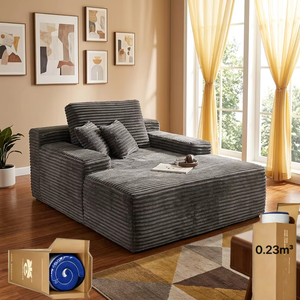
- Optimize Container Loadability (CBM): Recliners can be bulky. Professional factories engineer knock-down (KD) backrests and modular arms that maximize container loading density by up to 35%, significantly lowering per-unit ocean freight costs.