Choosing among the Top 10 Tufted Sofa Factory Suppliers Worldwide requires more than comparing catalog photographs. A reliable supplier must combine skilled upholstery, stable materials, accurate stitching, and consistent production control. The best factories show these qualities through detailed samples, transparent specifications, and repeatable quality records.
Dieter Rams, an influential industrial designer, said, “Good design is as little design as possible.” His principle also applies to a Tufted Sofa Factory. A beautiful sofa should not hide weak foam, uneven buttons, loose threads, or unstable frames. Factory visits, video inspections, and fabric tests can reveal details that polished websites often miss. Small details matter.
This guide examines leading suppliers through practical sourcing criteria. These include manufacturing experience, customization capacity, export performance, material transparency, and after-sales communication. It also considers production scale, because a large factory is not always the best factory. Some suppliers excel at hospitality projects, while others handle smaller private-label orders more carefully.
The ranking is not absolute. Costs, shipping conditions, and regional standards can change quickly. A factory that performs well today may struggle during peak seasons. That possibility deserves attention. Buyers should request current samples, confirm lead times, and inspect the frame construction before signing agreements. We also recognize one limitation: public factory information can be incomplete. Therefore, this selection combines available evidence with practical furniture-sourcing judgment, not promotional claims alone.
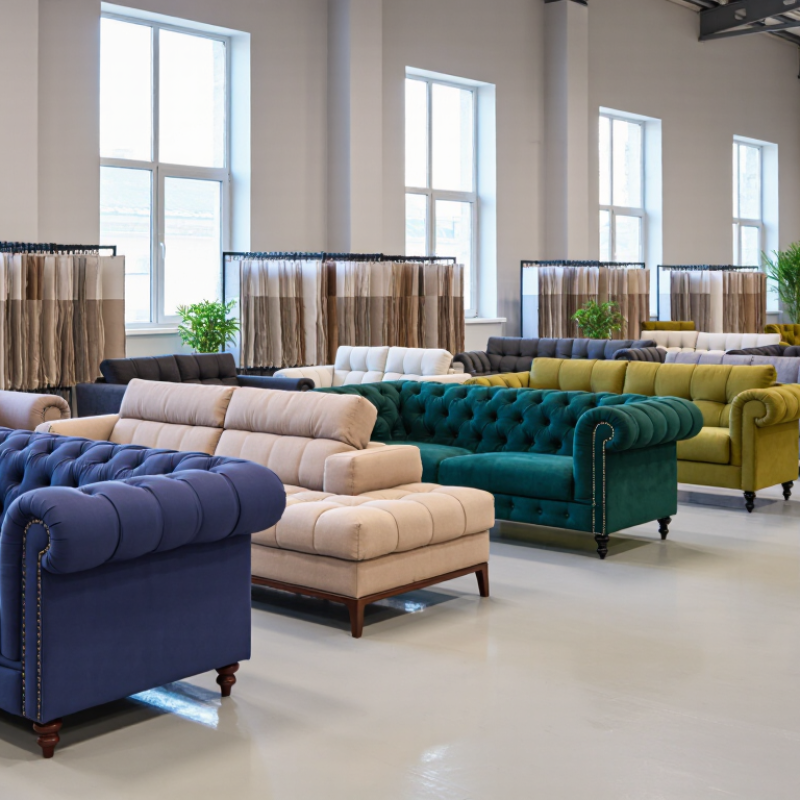
The global tufted sofa supplier market is shaped by more than attractive showroom photographs. It includes factories that design, manufacture, test, and export upholstered seating at scale. A practical top ten should compare production experience, material control, customization capacity, and delivery reliability. In factory audits, details matter: even stitching, firm corner padding, accurate frame joints, and clean carton protection often separate dependable suppliers from persuasive sellers. The market is broad, not uniform.
Leading suppliers usually maintain documented timber sourcing, foam-density records, fabric inspection, and batch-level quality checks. They can explain whether tufting is hand-pulled or machine-assisted, and how button tension stays consistent across a long sofa. Skilled teams also understand regional preferences, including deeper seats, firmer cushions, fire-safety documentation, and modular packaging. Export readiness involves more than shipping experience. It requires realistic lead times, stable production schedules, spare upholstery materials, and responsive communication when specifications change.
Buyers comparing the top ten should request recent factory videos, sample approvals, production photos, and references from similar projects. A small paid prototype can reveal comfort, seam alignment, odor, and structural noise before a large order begins. Price alone misleads. Very low quotations may hide thinner foam, weaker hardware, or limited inspection. No ranking is perfect. Supplier performance can change with staffing, material availability, or seasonal pressure. That uncertainty deserves attention, even when the showroom sample looks flawless.
A reliable ranking begins with production experience, not attractive showroom photos. We examine completed projects, factory capacity, and the team’s knowledge of tufted upholstery. Skilled workers should maintain even button spacing, firm pleats, and clean seam alignment. Small details matter.
Product quality receives the heaviest weight. We inspect kiln-dried frame materials, joint strength, foam recovery, fabric tension, and hidden staples. Seat cushions should regain their shape after repeated use. Factories should provide test records, material traceability, and clear inspection procedures. We also review sample accuracy before approving bulk production.
Communication affects the final result. Strong suppliers confirm drawings, dimensions, fabric codes, packaging, and delivery schedules in writing. They should explain minimum order quantities and report defects honestly. Factory audits can assess safety, working conditions, waste handling, and quality controls without relying on marketing claims. Consistent records build trust.
Pricing matters, but the lowest quote may conceal thinner foam or weaker internal supports. We compare total value, including packaging damage, replacement policies, lead times, and after-sales response. A ranking can still miss hidden problems. One factory may perform well during sampling but struggle with volume. For this reason, trial orders and independent inspections deserve serious weight. Their results reveal whether craftsmanship remains stable beyond the showroom.
The leading tufted sofa manufacturers differ in scale, materials, and production discipline. Manufacturer One specializes in deep-button upholstery, using firm foam and hand-secured thread. Its sample room reveals careful alignment across wide seat cushions. Manufacturer Two focuses on modular sofas, offering replaceable covers and flexible corner units. This suits apartments and changing room layouts. Manufacturer Three combines hardwood frames with dense elastic webbing. Factory inspections should confirm moisture control, not just attractive showroom pieces. Manufacturer Four is known for curved silhouettes and steam-shaped upholstery. Its craftsmen test fabric tension around every bend. Some curves remain slightly uneven. That detail deserves discussion before ordering.
Manufacturer Five develops stain-resistant textiles for hospitality projects. Its performance tests include abrasion, seam strength, and color fading. Manufacturer Six produces compact tufted sofas for smaller homes. It pays close attention to seat depth and narrow armrests. Manufacturer Seven offers traditional channel tufting with tailored piping. Its cutting accuracy reduces visible wrinkles. Manufacturer Eight emphasizes lower-impact materials, including recycled fiber blends and certified timber options. Buyers should verify current documentation independently. Manufacturer Nine handles large-volume orders with standardized frames and digital cutting systems. Consistency is strong, although customization can be limited. Manufacturer Ten serves premium interiors with hand-finished leather and individually inspected cushions. The surface feels distinctive, but natural marks may vary between pieces.
Across these factories, reliable evaluation requires more than photographs. Request frame samples, upholstery specifications, testing records, and production references. A factory may look impressive yet struggle with packaging or after-sales communication. Small defects are possible, even in experienced workshops. That is why staged inspections and written tolerances remain practical safeguards.
| Supplier Profile | Primary Manufacturing Region | Core Tufting Capability | Typical Product Range | Customization Options | Production Model | Common Export Markets | Indicative Lead Time | Best Fit For | Evaluation Rating |
|---|---|---|---|---|---|---|---|---|---|
| Supplier A | East Asia | Button tufting, channel tufting, diamond tufting | Tufted sofas, sectionals, chaise lounges, sofa beds | FabricLeatherDimensionsFoam density | OEM and project-based production | North America, Europe, Australia, Southeast Asia | Approximately 45–75 days after approval | Residential furniture brands and hospitality projects | ★★★★☆ |
| Supplier B | South Asia | Hand-buttoned upholstery and deep diamond tufting | Chesterfield sofas, club sofas, accent chairs, ottomans | Leather gradesNailhead trimWood finishes | Craft-led batch manufacturing | United Kingdom, Europe, North America, Middle East | Approximately 50–90 days after approval | Classic, traditional, and luxury interiors | ★★★★☆ |
| Supplier C | China | Automated panel cutting with machine and hand finishing | Modern tufted sofas, modular sectionals, recliner sofas | CAD developmentModular layoutsPower features | High-volume OEM manufacturing | North America, Europe, Asia-Pacific | Approximately 35–65 days after approval | Online retailers and multi-store furniture programs | ★★★★☆ |
| Supplier D | Vietnam | Loose-back tufting, channel tufting, upholstered frame construction | Contemporary sofas, apartment sofas, compact sectionals | Performance fabricsCompact sizingColor matching | Export-oriented contract production | United States, Canada, Australia, Europe | Approximately 45–75 days after approval | Contemporary residential and commercial collections | ★★★★☆ |
| Supplier E | Turkey | Deep button tufting, rolled-arm upholstery, decorative piping | Chesterfield sofas, living-room suites, lounge seating | LeatherContrast pipingLeg styles | Mid-volume design and export production | Europe, Middle East, North Africa, North America | Approximately 40–80 days after approval | Traditional, transitional, and premium furniture ranges | ★★★★☆ |
| Supplier F | Italy | Hand-finished tufting, sculptural upholstery, precision tailoring | Designer sofas, curved sofas, luxury lounge seating | Premium textilesCustom framesHand finishing | Design-led small and medium batch production | Europe, North America, Middle East, Asia-Pacific | Approximately 60–120 days after approval | High-end residential and boutique hospitality projects | ★★★★★ |
| Supplier G | Poland and Central Europe | Channel tufting, quilted upholstery, modular construction | Sectionals, sofa beds, family sofas, modular seating | Mattress mechanismsReversible modulesFabric programs | European contract and private-label production | European Union, United Kingdom, Scandinavia | Approximately 35–70 days after approval | Retailers requiring regional delivery and flexible models | ★★★★☆ |
| Supplier H | North America | Bench-made upholstery, biscuit tufting, tailored seat cushions | Custom sofas, residential sectionals, hospitality seating | COM upholsteryCustom dimensionsFire-code specifications | Made-to-order and contract manufacturing | United States, Canada, selected international markets | Approximately 60–100 days after approval | Interior designers, hospitality, and specification projects | ★★★★☆ |
| Supplier I | Mexico | Button tufting, panel tufting, leather and synthetic upholstery | Residential sofas, motion seating, commercial lounge furniture | Power reclineLeather alternativesPackaging options | Nearshore OEM and private-label production | United States, Canada, Latin America | Approximately 35–70 days after approval | North American retailers seeking shorter supply routes | ★★★★☆ |
| Supplier J | Indonesia | Hand-applied tufting, carved wood details, artisan upholstery | Statement sofas, resort seating, decorative lounge furniture | Reclaimed woodNatural fibersArtisan finishes | Craft production with export consolidation | Australia, Europe, North America, hospitality markets | Approximately 60–120 days after approval | Resort, boutique, coastal, and handcrafted furniture collections | ★★★★☆ |
Choosing among the top 10 tufted sofa factory suppliers requires more than showroom appearance. Product quality begins with kiln-dried timber, high-density foam, strong webbing, and consistent stitching. The Association for Contract Textiles recommends testing upholstery fabrics for abrasion, seam strength, and colorfastness. Martindale results above 30,000 cycles often suit heavy residential use. However, test numbers can mislead without production records and sample inspections.
Capacity also needs practical verification. IMARC Group valued the global upholstered furniture market at about USD 47 billion in 2023, with continued growth expected through 2032. This expansion increases pressure on factories to deliver steady output. Ask for monthly production capacity, container loading history, and peak-season lead times. A large facility may still struggle with small custom orders. That detail matters. Factory audits should compare approved samples with random units from finished cartons.
Tips: Request one pre-production sample and one final random inspection. Check foam recovery after repeated sitting, tuft depth, button security, and hidden-frame joints. For customization, confirm CAD drawings, fabric minimums, color approvals, packaging tests, and replacement-part policies. McKinsey reports that 71% of consumers expect personalized interactions, yet customization often raises costs and delays. Suppliers should provide clear price tiers and realistic schedules. I would also keep a written tolerance sheet, because “handmade variation” sometimes becomes an excuse for uneven tufting. Perfect consistency is not always realistic, but unexplained inconsistency is a warning sign.
A tufted sofa factory should prove quality, not merely display attractive samples. Grand View Research estimated the global furniture market at about USD 552.8 billion in 2022. This scale increases supplier choice, but also increases quality variation. Request production photos, material certificates, and recent inspection records. Examine one finished sofa closely. Check button alignment, stitch tension, cushion recovery, and frame movement.
Ask how the factory controls foam density, wood moisture, and fabric cutting. For high-use seating, request performance results using recognized methods, such as ASTM abrasion testing or BIFMA seating standards. A supplier claiming “premium foam” is not enough. The report should identify density, hardness, and test conditions. Fabric durability matters too. A high rub-count fabric may still feel harsh or pill under real use.
Factory experience is visible in small details. Open the underside of a sample. Look for clean webbing, reinforced corners, and protected staples. Confirm whether tufting is completed by trained workers or outsourced without supervision. Production capacity also needs evidence. Ask for monthly output, lead time records, and defect rates from the last three orders. I would not trust a perfect claim. A factory that shares problems and corrective actions may be more reliable than one promising zero defects. Before placing a large order, approve a pre-production sample and test it in realistic conditions.
Compare frame quality, foam density, stitching, customization, capacity, packaging, and delivery reliability. Photographs are not enough.
Request frame samples, foam specifications, fabric test records, and production photos. Inspect corner padding, joint accuracy, seam alignment, and button tension. Small defects can still appear.
Reliable factories document timber sourcing, foam density, fabric inspections, and batch-level quality checks. They explain tufting methods clearly. Communication matters too.
Yes. A paid prototype can reveal comfort, odor, seam alignment, and structural noise. Test it before approving mass production. It may still not expose every issue.
Ask for monthly output, recent container-loading records, and peak-season lead times. A large facility may struggle with small custom orders. That contradiction deserves attention.
Confirm CAD drawings, fabric minimums, color approvals, packaging tests, and replacement-part policies. Request clear price tiers and realistic schedules. Customization often costs more.
Check abrasion resistance, seam strength, and colorfastness results. High cycle counts can support heavy residential use. Test numbers alone can mislead.
Compare the approved sample with random finished units. Check foam recovery, tuft depth, button security, hidden joints, and carton protection. Written tolerances help. Perfect consistency is unrealistic.
The global tufted sofa supplier market includes manufacturers with different strengths in craftsmanship, production scale, materials, design flexibility, and international service. This overview explains how to evaluate a Tufted Sofa Factory by examining upholstery quality, frame construction, stitching precision, foam and filling options, production capacity, quality control, lead times, and sustainability practices. It also introduces ten types of leading manufacturers from various production regions without focusing on specific brand names, helping buyers understand the differences between specialized workshops, large-scale factories, and custom furniture producers.
A practical comparison of product quality, customization capabilities, pricing, order quantities, packaging, and export support can make supplier selection more efficient. Buyers should consider whether a factory can meet their preferred tufting patterns, dimensions, fabrics, colors, comfort levels, and packaging requirements while maintaining consistent quality. The right Tufted Sofa Factory should offer clear communication, reliable production planning, sample approval procedures, transparent quotations, and dependable after-sales support for long-term cooperation.